Misfit tooling
Spreadsheets and paper notebooks cannot compute automatic splits or track payer accountability in real time (44.4% and 66.7% usage).
Mobile App / Fintech
A collaborative mobile platform designed to eliminate social awkwardness around shared money through automated balances, transparency, and frictionless pairing.
Couples and families sharing living expenses frequently depend on spreadsheets and physical notebooks, tools never engineered for this dynamic. They fail to compute proportional splits, do not track who paid what, and cannot manage recurring expenses.
Through empathy mapping and participatory research, we discovered that the real issue was not just organization, but the emotional friction and hesitation around settling debts.
66.7%
rely on notebooks or spreadsheets to track shared costs
60.0%
have partial or zero clarity on individual vs. joint expenses
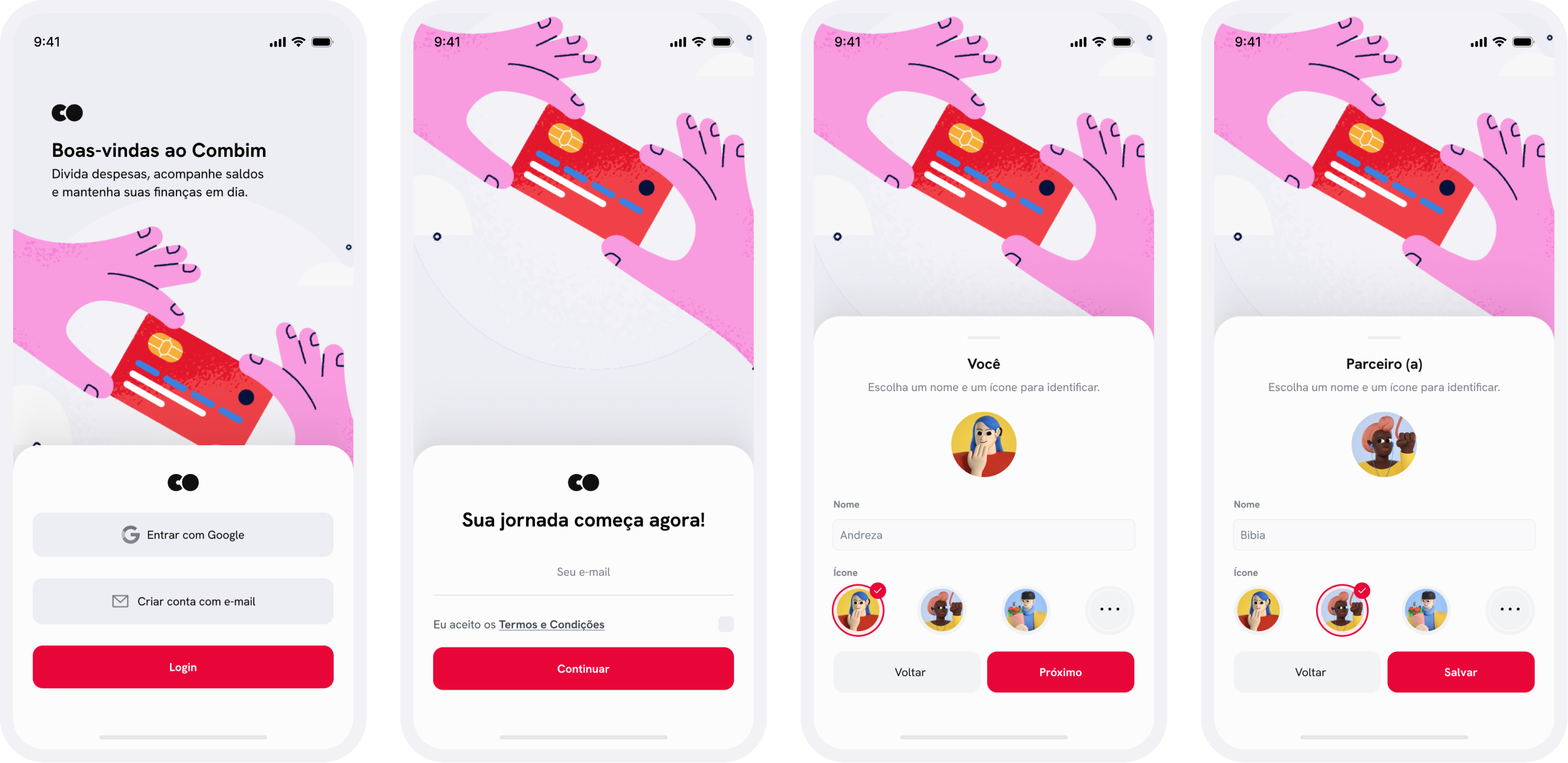
Spreadsheets and paper notebooks cannot compute automatic splits or track payer accountability in real time (44.4% and 66.7% usage).
The majority of cohabitating pairs lack a clear distinction between what constitutes individual versus joint household expenses (60.0%).
Chasing or being reminded about split money is an uncomfortable, repetitive chore (77.7%) — the core issue is interpersonal trust, not just bookkeeping.
Flow 01
A unified creation trigger branching into either a multi-step shared expense setup or a one-tap debt payoff.
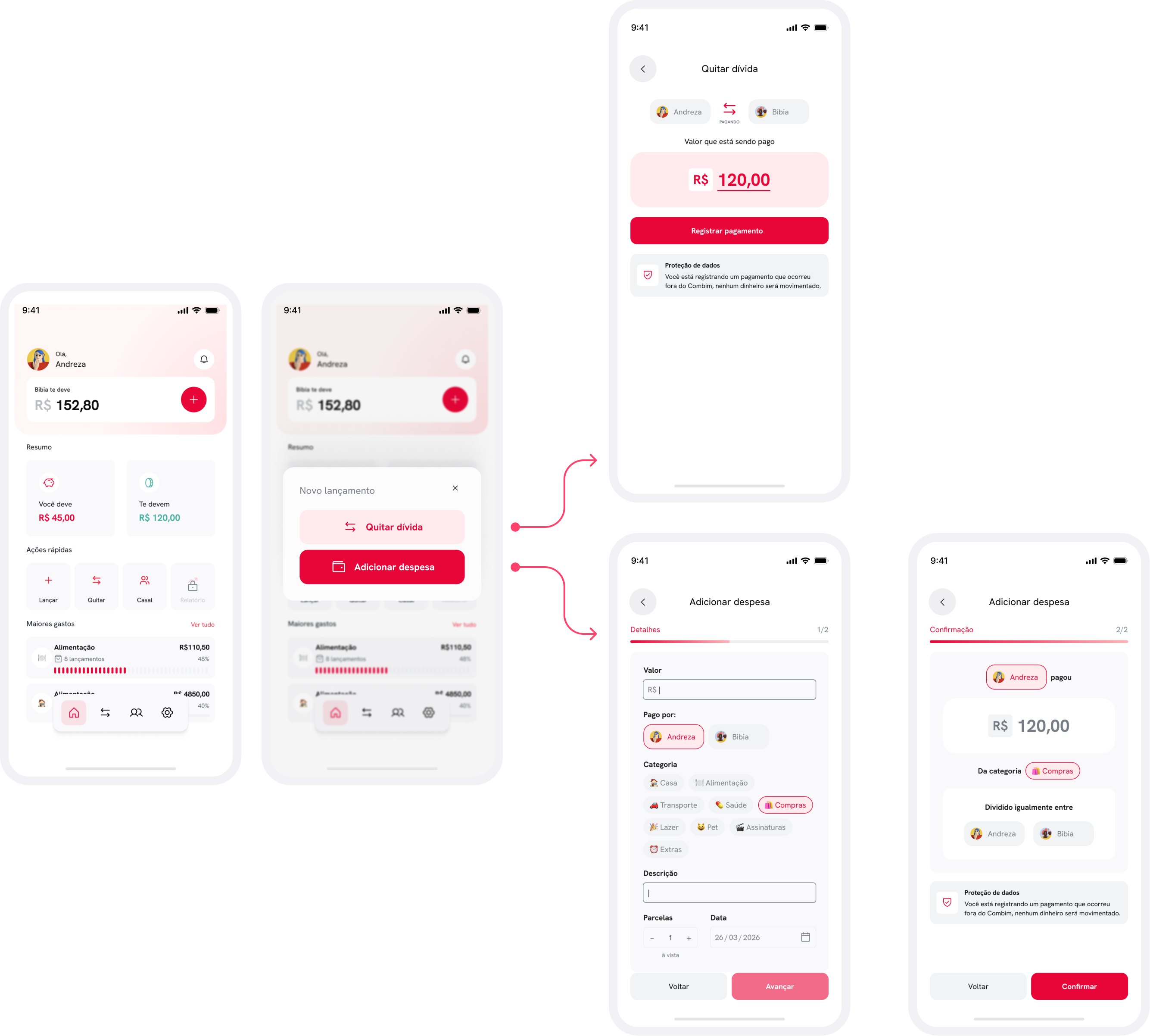
A direct path designed for speed. Automatically calculates pending balances between users and registers repayments without forcing extra form fields.
A structured 2-step wizard separating financial parameters (category, installments, payer) from final split confirmation to prevent input fatigue.
Flow 02
From first entry to granular editing, streamlining how users record, review, and adjust shared costs.
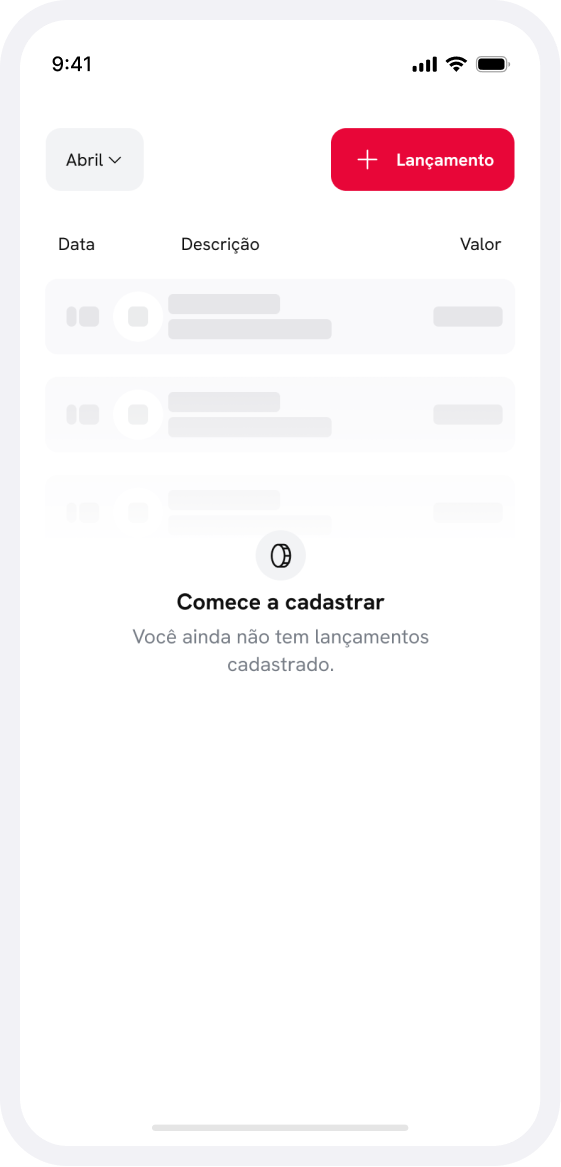
A clean onboarding view encouraging first-time logging with clear guidance.
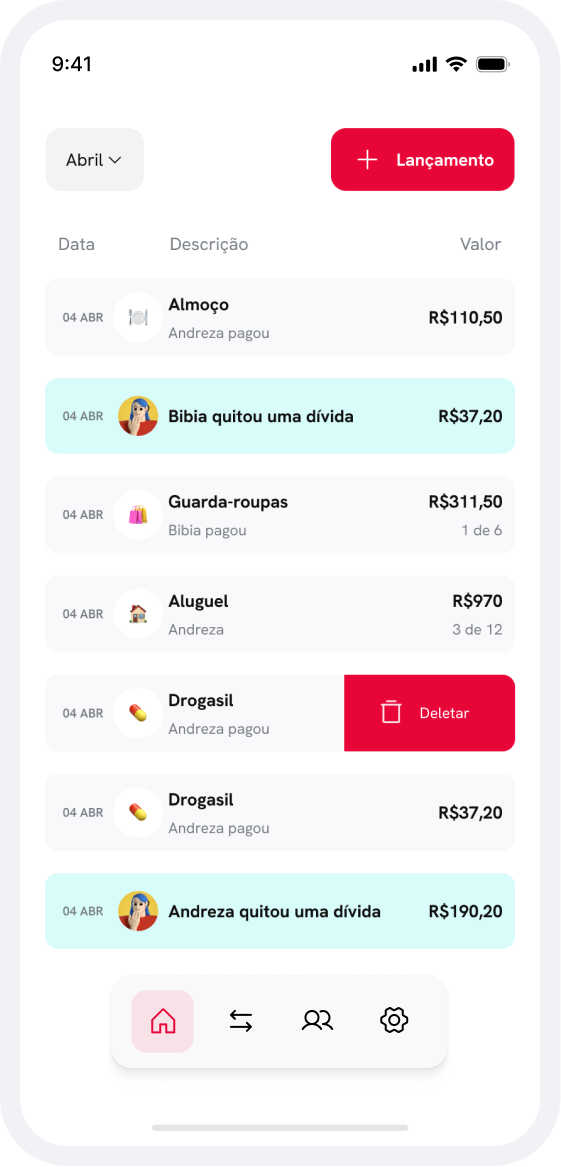
A unified timeline tracking recurring items, individual shares, and quick deletion actions.
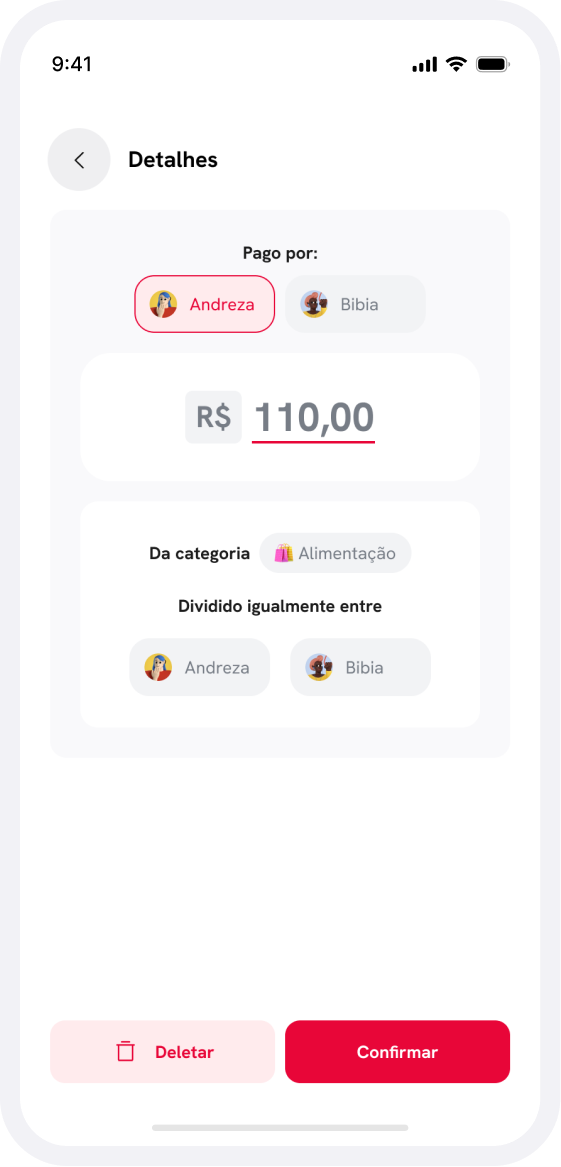
Intuitive modal to configure payer distribution, category tags, and split ratios.
In fast-paced expense logging, removing accidental duplicates or cancelled transactions should not require entering a sub-menu. We designed a gesture-driven swipeable card mirrored directly from our React Native codebase to the web.
✦ Built with elastic resistance, threshold-triggered confirmation, and physics-driven spring animations.
Live testing with real households is currently awaiting final clearance from UFRN's ethics review board. Validation to date has centered on technical delivery and rigorous process governance:
Fully functional on physical devices with React Native, Expo, and TypeScript. Supported by a 32-token architecture (16 color, 8 typography, 8 spacing) synced between Figma and code.
Iterative reviews moving from peer Product Designer alignment to PM discovery reviews, concluding with PM validation directly in the codebase.